Questions people ask · The neighbor
What did Jesus say about race?
The first time I preached in my hometown, I reminded them that God had sent his prophets to foreigners. They tried to throw me off a cliff.
At a Glance
What I said: Nothing about race as you use the word, which did not exist yet. A great deal about the walls between peoples in my day: Jews and Samaritans, Jews and Gentiles. I crossed them, and I made the outsider the hero (Luke 10:33; 17:16).
What the rest of the Bible says: He made from one blood every nation of men (Acts 17:26). There is neither Jew nor Greek … for you are all one in Christ Jesus (Galatians 3:28).
When today’s view appeared: The idea of humanity divided into ranked races by skin color took shape in the age of the Atlantic slave trade, from the 1500s on. Christians used the Bible both to defend it and to destroy it.
The short answer: In the church I started, people of different nations learned to eat at the same table. Every time my followers have built a wall between peoples, they have had to build it against me.
Start in Nazareth.
I grew up there. When I came back as a grown man and stood up to read in the synagogue, the town was proud of me at first. Then I said this:
There were many widows in Israel in the days of Elijah … Elijah was sent to none of them, except to Zarephath, in the land of Sidon, to a woman who was a widow. There were many lepers in Israel in the time of Elisha the prophet, yet not one of them was cleansed, except Naaman, the Syrian (Luke 4:25–27).
I reminded my own people that their greatest prophets had been sent to foreigners. They were all filled with wrath in the synagogue, as they heard these things (Luke 4:28). They drove me out of town to the edge of a cliff to throw me off it.
That was my first sermon at home, as Luke tells it. It was about whom God loves, and it nearly got me killed.
The walls in my day
There was no race in my world in the way you mean it. No one sorted people by skin color into ranks. But there were walls between peoples, and they were high.
The highest was between my people and the Samaritans. We both held the five books of Moses sacred, though they kept their own version of them, and we argued over where God should be worshiped. Jews have no dealings with Samaritans, John’s gospel explains (John 4:9). When a Samaritan village would not welcome us, two of my friends wanted to call down fire on it, and I rebuked them (Luke 9:54–55).
So I went through Samaria, and at a well at noon I asked a Samaritan woman for a drink. She was astonished: How is it that you, being a Jew, ask for a drink from me, a Samaritan woman? (John 4:9). My disciples came back and marveled that he was speaking with a woman (John 4:27). I stayed in her town two days.
When I told a teacher of the law what it means to love your neighbor, I made a Samaritan the hero, the one who stopped when a priest and a Levite walked past (Luke 10:30–37). When I healed ten lepers and only one came back to thank me, Luke notes: and he was a Samaritan. I said, Were there none found who returned to give glory to God, except this foreigner? (Luke 17:16, 18).
There was another wall in the Temple itself. The outer court was where Gentiles, people of other nations, were allowed to pray. That outer court is most likely where the money changers had set up their tables. When I drove them out, I quoted Isaiah: My house will be called a house of prayer for all the nations (Mark 11:17).
And I said that many will come from the east and the west, and will sit down with Abraham, Isaac, and Jacob in the Kingdom of Heaven (Matthew 8:11).
I had to learn it too
I will not pretend I stood above all of it. A Greek woman from the region of Tyre begged me to heal her daughter, and I answered her with the hard words of my day for outsiders: it is not appropriate to take the children’s bread and throw it to the dogs. She answered back, even the dogs under the table eat the children’s crumbs, and I healed her daughter (Mark 7:27–29).
She would not accept the wall, and I let her break it. If you have been raised on a wall, you can learn the same thing.
What the rest of your Bible says
Your Bible is honest about this. My people were often hard on other nations, and the Bible records it. But it also argues the other way.
When Moses married a Cushite woman, his own brother and sister spoke against him. Cush was the African kingdom south of Egypt, though some readers think she was his Midianite wife Zipporah. God was angry with them, and Miriam was struck with a disease that left her skin as white as snow (Numbers 12:1, 10).
The prophet Amos heard God say to Israel: Are you not like the children of the Ethiopians to me, children of Israel? (Amos 9:7).
After I was gone, one of the first outsiders baptized in the book of Acts was an official of the queen of the Ethiopians (Acts 8:27, 38). Then Peter, who had been taught that a Jew should not visit or eat with people of other nations, went into the house of a Roman officer and said, Truly I perceive that God doesn’t show favoritism; but in every nation he who fears him and works righteousness is acceptable to him (Acts 10:34–35).
Even then it was hard. Years later, in the city of Antioch, Peter ate with Gentile believers until visitors came from Jerusalem. Then he drew back and separated himself, and the others followed him. Paul resisted him to his face (Galatians 2:11–13). One of the first fights in my church was over whether people from different nations could sit at one table. Paul’s answer was this: There is neither Jew nor Greek, there is neither slave nor free man, there is neither male nor female; for you are all one in Christ Jesus (Galatians 3:28).
What came after
The idea that humanity is divided into races, ranked by color, with Europeans at the top, is not in your Bible. It grew up with the Atlantic slave trade, from the 1500s onward, when Christian nations needed a reason why some people could be bought and sold.1
They found one in a verse that does not say it. In Genesis, after the flood, Noah got drunk, and his son Ham saw him naked. When Noah woke, he said: Canaan is cursed. He will be a servant of servants to his brothers (Genesis 9:25). Canaan, not Ham. Nothing about skin. Nothing about Africa. But for centuries, preachers taught that Africans were the children of Ham, and that God had cursed them to be slaves.2
In 1845, white Baptists in the American South broke away from the Baptists of the North over whether a slaveholder could be appointed as a missionary. They founded the Southern Baptist Convention.3 After slavery ended, many white churches defended segregation from the pulpit. Bob Jones University, a fundamentalist Christian school, kept a ban on interracial dating until 2000, and lost its tax exemption over its racial policies, a loss the Supreme Court upheld in 1983.4 In 2008 it apologized.
But my followers were on the other side too. The great abolitionists were very often Christians, Black and white, and so were many of the leaders of the civil rights movement. Martin Luther King Jr. was a Baptist preacher. In 1963, from a jail cell in Birmingham, he answered eight white clergymen who had called his demonstrations “unwise and untimely.”5 And he said, in 1960, that eleven o’clock on Sunday morning was one of the most segregated hours in Christian America.6
In 1995, the Southern Baptist Convention formally admitted that many of its forebears had defended slavery, and that Southern Baptists had in some cases opposed civil rights for African Americans. It repented of racism, apologized to all African Americans, and asked their forgiveness.7
The walls are lower now than they were, though they still stand. In 1998, about 6 percent of American congregations were multiracial, meaning no single group made up more than 80 percent of the people. By 2019, about 16 percent were.8
What You’ll Hear Back
“The gospel is colorblind. Talking about race only divides people.”
Paul did say neither Jew nor Greek. But he did not say it to end the conversation. He wrote it in the same letter where he tells how Peter and the others had quietly stopped eating with people of another nation. Paul named it, in public, to Peter’s face. Saying that the wall should not exist did not make it disappear. Someone had to notice who was eating where.
“That was a long time ago. I never owned a slave.”
No one is asking you to repent of what your great-great-grandfather did. But some of this is not long ago. The Southern Baptist apology came in 1995. The ban at Bob Jones ended in 2000. Many people still living were turned away from white churches as children. When you inherit a house, you inherit its cracks along with its rooms.
“The Bible accepts slavery.”
It does record slavery, and some of its letters tell slaves to obey their masters. That is one of the hardest parts of your Bible, and the church argued about it for centuries.9 But the slavery in your Bible was not based on race, and the verse used to make it about race does not say what the preachers said it did. And the story at the center of your Old Testament is God bringing slaves out of Egypt.
“Jesus was a Jew. Isn’t this about nations, not race?”
Yes. I was a Jew from Galilee, with the skin of a man from my part of the world. The paintings that made me pale with blue eyes came much later.10 And the walls in my day were between nations and peoples, not colors. But a wall is a wall. Whatever the reason given for it, I crossed it, and so did the first church.
Check It Yourself
Look up: Luke 4:16–30.
You will find: my first sermon in Nazareth, and what my own town did when I mentioned the foreigners.
Then read John 4:1–42 and Galatians 2:11–14, and ask who ate with whom.
The Short Version
- Race, sorted by skin color, did not exist in my world. Walls between peoples did.
- I crossed them: I spoke with a Samaritan woman, made a Samaritan the hero, and called the Temple a house of prayer for all the nations.
- Your Bible says God made every nation from one blood, and Paul said there is neither Jew nor Greek.
- The idea of ranked races grew up with the Atlantic slave trade. The curse of Ham was taught from a verse that does not say it.
- My followers both defended segregation and led the movement that ended it.
Go deeper
Every part of this answer has a longer history behind it, in the books. Here is where to find it.
Four free books, in the same voice
Each one stands on its own. None of them asks for anything.
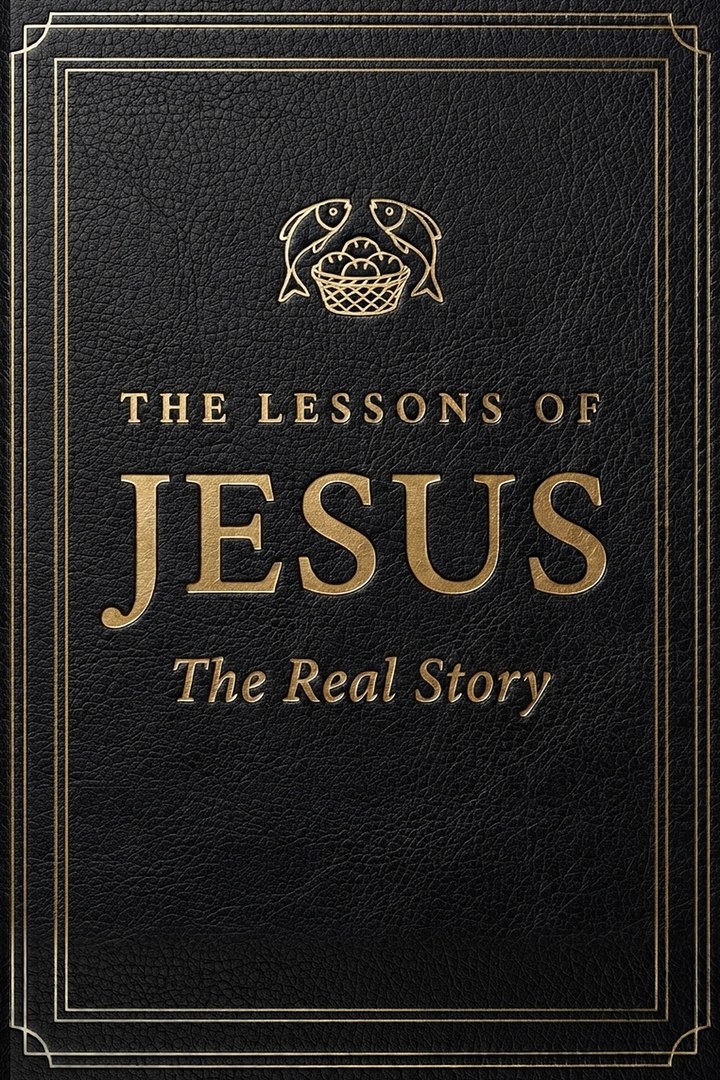 Book OneThe Real StoryForty lessons on what he taught, and what was built on top of it.
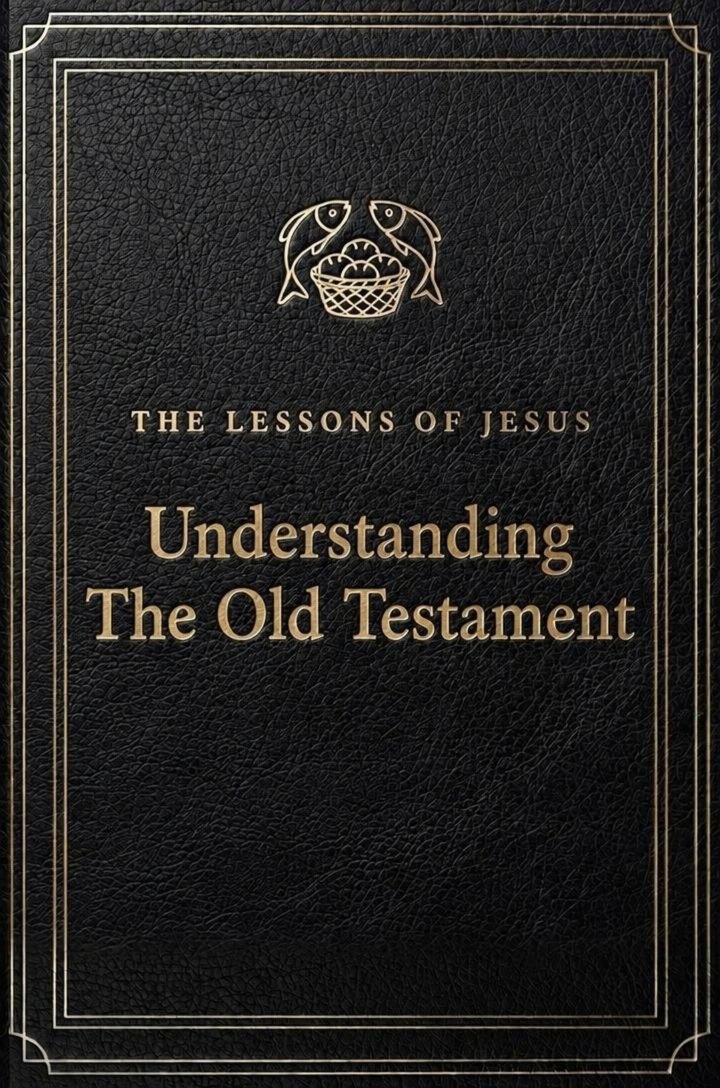 Book TwoUnderstanding the Old TestamentThe scriptures he grew up on, one chapter for every book.
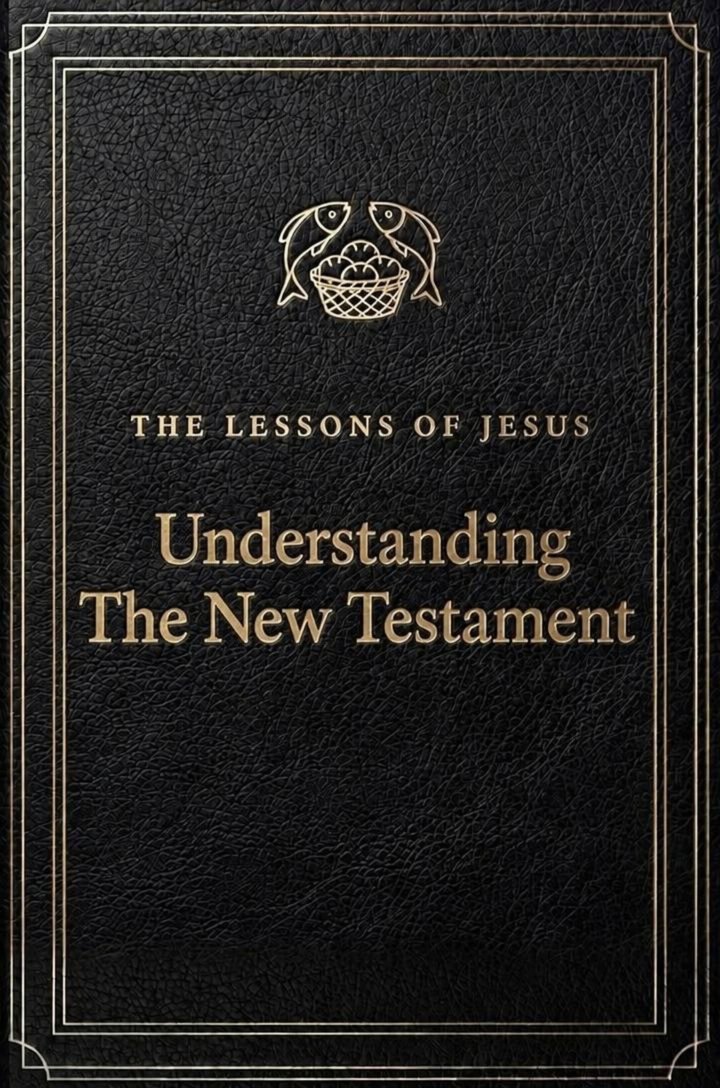 Book ThreeUnderstanding the New TestamentThe books written about him, one chapter for every book.
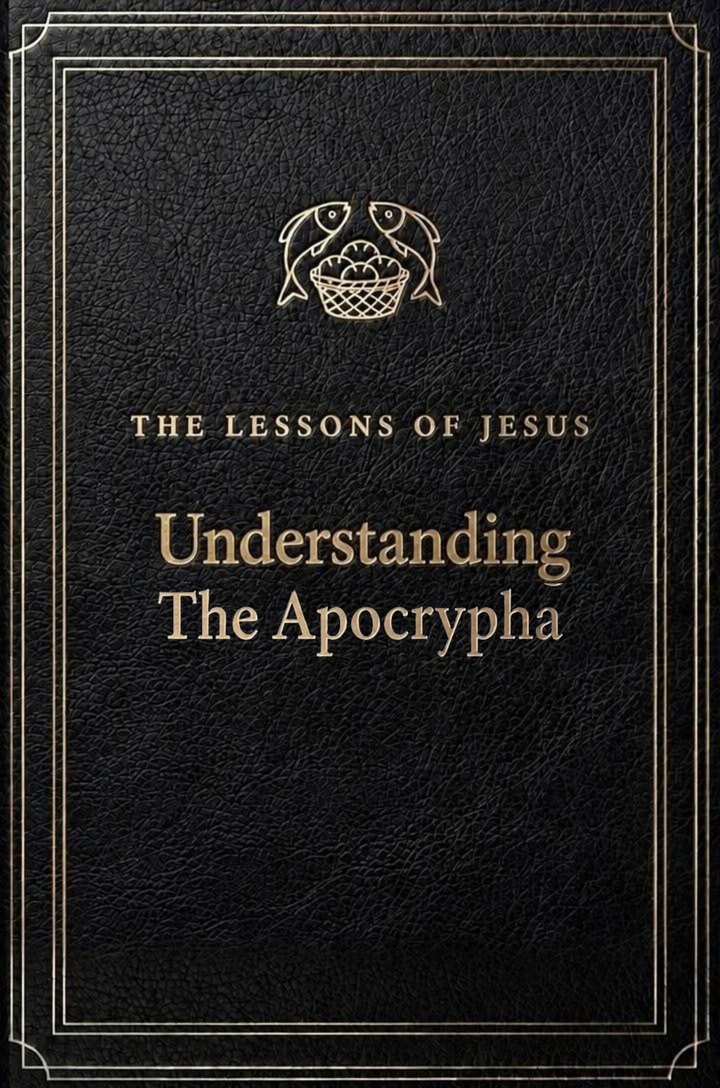 Book FourUnderstanding the ApocryphaThe books your Bible left out, and the lost gospels.
Sources for this page
Every numbered note in the text points here, so nothing has to be taken on trust.
- On the rise of the idea of race in the early modern period, see George M. Fredrickson, Racism: A Short History (Princeton: Princeton University Press, 2002). ↩
- On the use of Genesis 9 to justify slavery, see David M. Goldenberg, The Curse of Ham: Race and Slavery in Early Judaism, Christianity, and Islam (Princeton: Princeton University Press, 2003), and Stephen R. Haynes, Noah’s Curse: The Biblical Justification of American Slavery (New York: Oxford University Press, 2002). ↩
- The Southern Baptist Convention was organized at Augusta, Georgia, in May 1845, after the American Baptist Home Mission Society declined in 1844 to appoint James Reeve, a Georgia slaveholder, as a missionary, and the national foreign mission board said it would not appoint a slaveholder either. ↩
- Bob Jones University v. United States, 461 U.S. 574 (1983). The university dropped its ban on interracial dating in March 2000. ↩
- Martin Luther King Jr., Letter from Birmingham Jail (April 16, 1963), answering “A Call for Unity,” a public statement by eight Alabama clergymen. ↩
- Martin Luther King Jr., interview on Meet the Press, NBC, April 17, 1960. ↩
- Southern Baptist Convention, Resolution on Racial Reconciliation on the 150th Anniversary of the Southern Baptist Convention (Atlanta, June 1995). ↩
- Kevin D. Dougherty, Mark Chaves and Michael O. Emerson, “Racial Diversity in U.S. Congregations, 1998–2019,” Journal for the Scientific Study of Religion 59, no. 4 (2020): 651–662. ↩
- See Lesson 29 of The Real Story, “The Long Argument About Slavery.” ↩
- See Lesson 22 of The Real Story, “My Face.” ↩